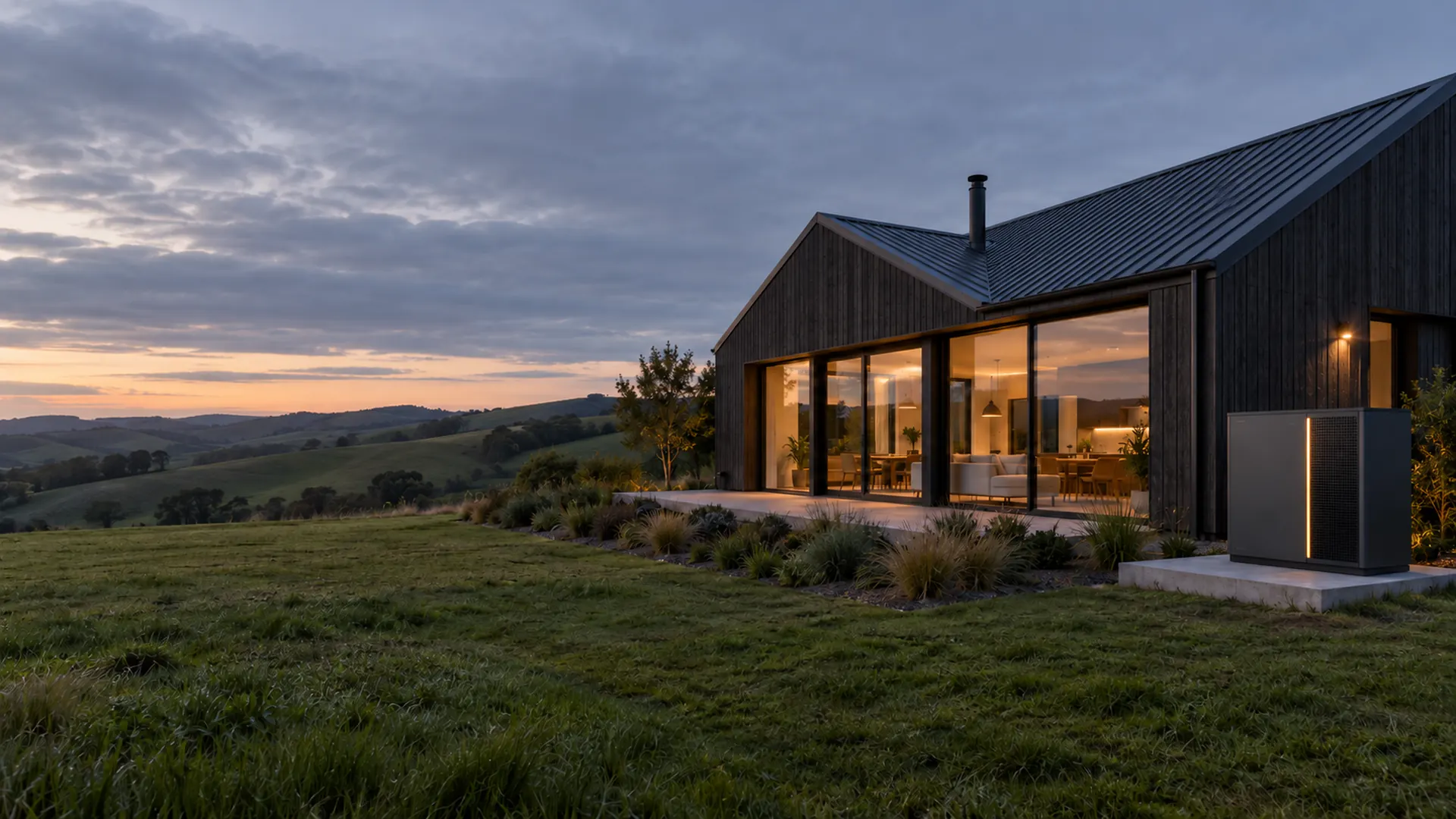
Water in.Power out.
Off-grid power for rural homes in New Zealand and Australia. H2OME turns water into hydrogen and hydrogen into power, so the lights stay on when the lines go down.
Join the pilot listOff-grid power for rural homes in New Zealand and Australia. H2OME turns water into hydrogen and hydrogen into power, so the lights stay on when the lines go down.
Join the pilot listStorms take the lines down and rural streets are the last to come back on. Days without a freezer, a pump or a modem.
Noisy, smelly, and only as good as the last fuel run. Every outage costs you jerry cans and an evening outside in the rain.
A battery bank covers one night. A long outage drains it, and then you're back to the generator.
Fixed daily charges keep rising, and a new rural connection can cost tens of thousands before you use a single unit.
Cheap night-rate power splits water into hydrogen. The hydrogen waits in a tank. When you need power, a fuel cell turns it back into electricity and water, and the water goes round again.
How it works →Filtered water fills the loop. The fuel cell makes water back, so it goes round again.
It tops itself up on off-peak night-rate power, when electricity costs least.
A hydrogen tank doesn't lose charge sitting there, so a winter or a long outage is covered.
No engine, no fumes, no fuel runs. The only exhaust is water vapour.
Lifestyle blocks and off-grid houses that want to cut the cord.
Pumps, sheds, milk vats and fences that can't stop when the lines do.
Workshops, remote sites and telecom huts paying for diesel today.
Homes on the grid that want the lights on through every storm.
It isn't free energy. The water goes round forever. The energy comes from cheap off-peak power, stored as hydrogen for when the lines go down.
Round-trip efficiency. About a third of the power that goes in comes back out, which is why it charges on the cheapest night-rate power.
Stored hydrogen holds its energy. Batteries handle the evening, hydrogen handles the long gaps.
Continuous output, enough for an average New Zealand or Australian home with headroom for peaks.
Pilot installs go to people on this list first. Rural homes, farms and remote sites especially. No spam, no payment.